Monday, December 10, 2018

First Look: PUMA IGNITE NXT Golf Shoes

Let’s throw some credit to PUMAGolf for single-handedly reviving the lost art of the media kit. Just arrived at MyGolfSpy’s Upstate NY office is a 28lbs hexagonal box containing the IGNITE NXT, the company’s latest spikeless offering.

From a technology standpoint, much of what PUMA built into the NXT is stuff we’ve seen before. You get IGNITE foam for comfort. PWRFRAME and PWRCAGE for stability, and a new waterproof, non-stretch mesh upper for comfort and curb appeal.

The names of the tech may change, but at the end of the day, we’re talking about a spikeless golf shoe designed for comfort, and I suppose playability. What sets the IGNITE NXT apart from the competition is that PUMA is giving you the choice of three distinct lacing systems.

IGNITE NXT LACE

I suppose we should describe the NXT Lace as offering a traditional shoe fastening system. It’s been a while since I learned to tie my shoes, but something about bunny ears…I don’t know…this is pretty boilerplate as far as securing shoes to your feet goes. It’s perfect for the guy who knows how to tie his shoes and enjoys doing it.

IGNITE NXT DISC

As the name suggests, the IGNITE DISC uses PUMA’s proprietary dial system (it’s not BOA) for what the company calls a locked in, consistent and custom fit. It’s my preferred fastening system, and if I had my druthers, it would be standard on every shoe. As I’ve been saying for the last several years, laces are for suckers.

IGNITE NXT SOLELACE

Spit the name apart – Sole lace – and it’s pretty simple to understand what’s going on here. Call it a fresh take on laces; the eyelet locations have been pushed down such that the laces are basically strung through the midsole. PUMA says the system completely envelops the foot while providing 360-degree support, securing midsole and outsole to your foot, for the ultimate ground feel.

I don’t know about that (I haven’t logged any course time yet), but if there’s been a knock on PUMA’s recent spikeless designs it’s that, while the comfort was all but inarguable, the stability perhaps hasn’t been on par with some others playing in the spikeless category. In theory, SOLELACE should do a better job of locking your foot in place without sacrificing too much in the comfort department. It’s an intriguing idea; we’ll see how it works out in the real world.

All three versions of the IGNITE NXT Spikeless feature what PUMA calls organically layered traction. The sole features more than 100 hexagonal nubs, which PUMA says have been specifically positioned to provide traction throughout the swing. I have my doubts, but that’s coming from a fairly devout spiked shoe guy. Short of the FJ Pro/SL, I haven’t found a spikeless I’ve felt performed as well as a spiked shoe on the course. Again, we’ll see.

Pricing and Availability

The entire PUMA IGNITE NXT Spikeless family is available now at CobraPumaGolf.com. Retail price is $120 regardless of how you like to lace. Be advised, they run a little large, so PUMA suggests going down 1/2 size. Multiple colorways are available in each mode.

For more photos, visit the PUMA IGNITE NXT Gratuitous Photo Thread in the MyGolfSpy Forum.


from MyGolfSpy https://ift.tt/2zTkIup

Can’t Decide What Business to Start in 2019? No Problem, We’ll Tell You

what business to start in 2019

This article is part of our Business Startup Guide—a curated list of our articles that will get you up and running in no time!

Every month, over 1 million people visit Bplans. Most of those people are at the very early stages of starting a business and as such, are looking to see what others have done. Some have already decided and are in the process of writing a business plan.

They’re asking questions: What should a restaurant that needs a business loan include in their business plan? How do you write an executive summary for an online clothing business?

Whether you’re writing a business plan, or simply looking for data to corroborate your research, reviewing sample business plans can give you excellent insight that will help you write your own plan and think through every aspect of starting your business.

So what business should you start this year? What are the most popular industries? What opportunities are opening up in 2019?

We can’t tell you exactly what type of business you personally should start (that would entirely take the fun out of things) but we can tell you which of our sample business plans were most popular in 2018.

Download your free business startup checklist today!

The most popular business plans on Bplans

In 2018, our most popular sample business plans were:

  1. Bakery
  2. Coffee shop
  3. Hair and beauty, salon and spa
  4. Fast food restaurant
  5. Agriculture and farming
  6. Nonprofit youth services
  7. Clothing retail
  8. Construction
  9. Cleaning services
  10. Personal event planning

what business to start in 2019

Food service: Restaurants, bakeries, and coffee shops

Our sample business plans in the restaurant, bakery, and cafe category rank consistently within the top 20 on Bplans. Of course, fast-food franchise businesses are also still booming—globally, fast food generates more than $570 billion.

If you’re thinking about starting a business within the food services industry, we recommend preparing for a healthy if eclectic year ahead. Take a look at this great list of food trends for 2019.

If you’re serious about your research, also be sure to have a look at the “What’s Hot Culinary Forecast” compiled by the National Restaurant Association. I also recommend checking out the Benchmark dining trends for 2019.

Best of Bplans for starting a bakery, restaurant, or coffee shop:

How to start a business in 2019

Salon and spa

The salon and spa industry continues to grow and evolve. Just as a clothing retailer has to know fashion trends, hairstylists and beauty salons have to stay on top of trending hairstyles, looks, and other beauty trends, including new treatments and products.

For 2019, experts predict that CBD-enhanced treatments will land on the scene across the nation. So, make sure you know what services other salons are adding to the beauty menu in the upcoming year.

Best of Bplans for starting a salon or spa:

How to start a business in 2019

Agriculture and farming

Agriculture and farming sample business plans were more popular than ever in 2018.

We suspect that’s in part because of a growing interest in farm-to-table, or locally sourced ingredients. But it may also be related to newer legislation around growing and selling cannabis at marijuana dispensaries and other up and coming sales opportunities across the U.S.

Best of Bplans for starting a farming or agriculture business:

How to start a business in 2019

Nonprofit youth services

Starting a nonprofit as a way to use your skills to address a community is always a popular topic on Bplans. There’s always a need for quality counseling or mentoring services; if you have an interest in sports, you could start a basketball youth league; and if you have an interest in education, you could start an after-school homework-help program.

There’s no shortage of need out there. Take a look at trends in philanthropy for 2019 if you’re thinking about starting a nonprofit. And connect with the National Council of Nonprofits to learn more about wider trends affecting nonprofits heading into 2019.

Best of Bplans for starting a nonprofit:

How to start a business in 2019

Retail and clothing

Clothing retail is another area where we see a lot of interest from readers—both for brick and mortar stores and ecommerce.

One of the most notable retail trends to watch for in 2019 is the rising success of hybrid or multi-channel retail—meaning that retailers with a physical location will be more likely to also have an ecommerce or online sales arm to their business.

For more on this year’s retail trends, check out this podcast from the National Retail Federation.

Best of Bplans for clothing retail and ecommerce:

How to start a business in 2019

Construction

The 2019 outlook for the construction industry looks solid, thanks to increased demand and hopes around larger infrastructure projects this year. Especially as interest grows around green building techniques, and as the industry makes technical advances around modular and prefabricated construction projects.

Read more about the Associated Builders and Contractors’ take on the future of construction here.

Best of Bplans for starting a construction business:

How to start a business in 2019

Cleaning services

Cleaning services are among the easiest and most affordable businesses to start, and the industry is expected to spur 6 percent growth in new jobs by 2020.

Like the construction industry, the trend toward green or eco-friendly solutions is expected to continue into 2019.

Best of Bplans for starting a cleaning service business:

How to start a business in 2019

Event planning

From wedding planning to large galas to big corporate events, more and more businesses and individuals are looking for help with the details.

The event planning industry is expected to grow faster than the average industry—by more than 11 percent by 2026. For more on how the industry is growing and changing, check out these event planning associations.

Best of Bplans for starting an event planning business:

Still looking for the right business idea? Check out our guide to generating hundreds of business ideas, or this list of more than 30 ideas. If you’re not quite there yet, check out our guide to finding a great business idea.


from Bplans Articles https://ift.tt/2EoLbDF

First Look: Wilson Staff D7 Irons

What would you say is the key difference between a Super Game Improvement iron and an iron in the emerging Players Distance category?

First, let’s look at the similarities. The SGI category promises forgiveness and distance for straighter, longer shots. Workability, of course, isn’t part of the equation. Players Distance promises distance and forgiveness for longer, straighter shots, with enough potential workability to make a better player swoon.

Seeing any common threads?

Put the two irons side-by-side and the biggest difference is obvious: one looks sleek, simple and, dare I say, sexy — the other looks like what better players disdainfully refer to as a shovel, with more bling than that one crazy aunt everyone has.

With today’s release of its new D7 irons, Wilson Staff is trying to bridge the gap between those two categories – by combining distance and forgiveness the SGI player needs with the clean looks a better player wants.

It’s a neat trick, but can that gap be bridged, or is it a bridge too far?

Meet The D7

There’s plenty of performance tech to talk about with the D7, but the most startling difference is its looks. D7 bears little, if any, resemblance to the 2-year-old D300, which it’s replacing.

“We have a strong history of what I’d call very bold and very red design elements,” says Wilson Golf Club Innovation Manager Jon Pergande. “Bold features denote forgiveness, but also chunkiness, with a heavy dose of red accents.”

The first thing you notice about the new D7 is the absence of bling. The second is an absence of red. Compared to its predecessor, D7 looks sleek, simple and sexy. The flashy red cavity decoration is gone, replaced with simple black and chrome, with a whisper of blue.

“The blue cools things off and makes it look a bit sleeker,” says Pergande. “But that sleekness is tied into the design. The D300 was very abrupt, with large features in the back, with Power Holes visible on the top line.”

The goal, says Pergande, was to create a cleaner, classier looking distance iron that could appeal to that Players Distance golfer looking for a little more forgiveness.

“We started by looking at the V6 and C300 Forged irons, products we’ve had great success with, and tried to work more of a traditional looking aesthetic,” he says. “So we’re losing the Power Holes on the topline and opening up the cavity a little bit to increase the MOI.”

Ahh, the Power Holes. From an aesthetic viewpoint, folks either ignore them, find them mildly irritating or loathe them entirely. Regardless, they’re gone from D7’s top line but are still used on the sole. There’s a Power Hole performance/tech story to be told, but at least half the D7 story is about curb appeal. Wilson wants it to wink at you from across the room.

Pick Me, Pick Me!

Even though the data says there’s no real correlation between looks and performance, when it comes to grabbing something off the shelf and giving it a whack or two on the launch monitor, we do like that eye candy.

“We’re trying to improve the initial consumer experience at the point of purchase, prior to testing,” says Pergande. “Part of that experience is a very clean shape. We wanted to keep the shape as clean as possible and hide the robustness and forgiveness for that better player’s eye.”

In that respect, Wilson’s done a pretty decent job. The D7 may not be the Kate Upton of irons, but it’s no Mimi from the Drew Carey Show, either. Getting rid of the top line Power Holes helps immensely. For an SGI iron the top line isn’t bad at all (a side-by-side comparison with the C300 Forged is below) and Wilson has done a nice job hiding the offset.

“The transition of hosel to leading edge is always tricky,” says Pergande. “These are distance clubs, and you want to have offset. It helps, especially in the longer irons. But as long as you transition the blends, you can hide the offset, and as long as you camber the topline a little, you can hide that width.”

“We think the market is shifting away from super-forgiveness looking and super chunky looking, and has moved into this much cleaner, more traditional look. I don’t want to associate D7 with a purely traditional look – it still has a large blade. But there are a lot of design cues that may improve the experiences for the better player, and maybe give him or her some added distance they may need for their game.” – Jon Pergande, Wilson Golf

The D7’s styling fits in nicely in Wilson’s iron continuum, with a family resemblance to the C300, C300 Forged, and FG Tour V6 (and maybe those sweet looking new blades), as well as the Super-Duper Game Improvement D350, for branding consistency, but with enough identity to stand on its own.

Putting the D in Distance

Wilson’s categorizes its iron sets as well as anyone in the business. D is for Distance, F (as in FG Tour V6 or FG Tour 100) is for Feel and C is for Crossover: more distance than the F’s, more feel than the D’s. Wilson’s very good at D, with both the D300 and D350 finishing at or near the top in both ball speed and carry distance in MyGolfSpy’s 2018 Most Wanted SGI iron test. Power Holes do their job.

Power Holes are Wilson’s way of creating more face-deflection, something virtually every iron-maker is doing in the quest for distance. The tech debuted in January of 2016 in the C200 iron, and Wilson has since added the technology to both the C and D series. The idea behind Power Holes? Disconnect the clubface from the head structure as much as possible, allowing the face to flex more at impact to maximize ball speed, no matter where on the face you hit it.

The top line Power Holes are gone, but Wilson is incorporating what it calls Progressive Power Hole technology on the sole, basically putting the power where you need it: three rows of Power Holes in the long irons (4-7), two rows in the 8- and 9-irons, and only one row in the Gap Wedge.

“Where do you need ball speed the most? For most players, it’s the long irons, the ones they struggle to hit the most,” says Pergande. “That’s where you need your distance advantage. People don’t need help hitting a pitching wedge farther. Besides, Power Holes don’t provide as much benefit on a more lofted club because the ball hits at such an angle.”

Previous Power Hole tech was known as FLX Face because Power Holes let the face flex. In the D7, however, Wilson is calling its ball speed tech something new: RE-AKT.

“It’s sort of an umbrella technology platform for the entire D7 series,” says Pergande. “Greater ball speed and higher MOI, so you get straighter shots that go farther. We also have the thinnest face we’ve ever had in an iron, and we do all that in a performance iron aesthetic.”

The Battle of the 7-Irons

If more on-the-shelf sex appeal is one key element of the D7, winning the battle of the 7-irons is the other.

“We’re putting a stake in the ground. We want to win with the 7-iron,” says Pergande. “The definitive consumer experience for 90% or more of golfers is the 7-iron. That’s the one you have for demo clubs; it’s where custom fit is usually centered and, generally speaking, it’s one of the longer clubs most players can hit comfortably.”

“So if we can make sure we have the best possible 7-iron experience for the consumer at his first contact, we’re going to do all we can to make that happen.”

Wilson isn’t short-changing the other clubs at the expense of the 7-iron. The 4, 5 and 6 have the same tech, but they figure the confluence of curb appeal, performance, and the club D series players use most is at the 7.

And you do have to give Wilson some credit for straight talk. Pergande says you’ll find the D7 roughly 5 yards longer than D300, but adds half of that is due to a slightly stronger loft structure, which is actually now more in line with others in the SGI world.

“It varies by clubhead speed, but you usually get an extra two-and-a-half yards per degree of loft increase. The rest is coming from the Power Holes and the club’s forgiveness.”

From an MOI standpoint, Wilson says the D7 features a roughly 10% increase in MOI over the D300, largely due to a change in the back cavity. The D300s featured large pods in the back cavity, towards the toe and heel.

“Those pods weren’t 100% filled with weight, and they weren’t putting weight toward the extreme perimeter of the club,” says Pergande. “It made the club look more forgiving, even though it’s not the most efficient use of weight.”

With D7, Pergande says that weight has been shoved more heel-ward and more toe-ward.

“When it comes to forgiveness, size rules the roost. The larger the (iron head), the more forgiveness will be in there. But once you establish a head size, it’s all about weight management.”

Price, Availability and Final Thoughts

MyGolfSpy has long suggested golfers should consider using the most forgiving club you can stand to look at. Wilson seems to have taken that to heart by giving the D7 a makeover – swapping the loud sportcoat for a black tie and tails. And while Wilson is trying to suggest D7 would be at home in the Players Distance category, the sole is still SGI-wide, and the blade is still SGI-long. Wilson’s choice of stock steel shaft – the KBS Tour 80 – is still SGI-centric.

Wilson has taken heat for the $499 price tag on the Driver Vs. Driver winning Cortex, so it needs to be noted the D7 will retail at $599 in steel and $699 in graphite (UST Mamiya Recoil is stock). That’s a full $200 price drop from D300’s original retail.

After a couple of range sessions, we can say the D7 is a worthy successor to the D300 (again, an excellent ball speed/distance performer in Most Wanted). Could it realistically bridge the gap between SGI and Players Distance? Well, at $599, an upgrade to a C-Taper, DG or any other stronger player shaft wouldn’t break the bank. If, that is, you think it’s a gap that needs bridging.

Wilson lists the KBS Tour, Tour FLT, Tour V and Tour 90 as no-upcharge options. A black Wilson-branded Lamkin grip is standard, and in keeping with the D7 austerity program, the logo and cap are in simple white, with no red or blue accents.

The D7 irons will be available at retailers and on Wilson’s website starting January 17th.


from MyGolfSpy https://ift.tt/2QOziwC

Friday, December 7, 2018

Miura Adds E-Commerce Platform

As part of its continued efforts to better market and sell products in North America, Miura Golf has introduced a direct-to-consumer platform, where consumers can build and purchase iron sets, wedges, and putters via its website.

The online menu includes Miura’s core equipment offerings and a limited selection of set make-ups, shaft choices, finishes, and grips. Online prices are the same as what golfers will find at any brick and mortar Miura dealer.

Miura’s President, Hoyt McGarity, says the move is a necessary evolution of the brand and a more efficient way to drive sales and create a more comprehensive customer experience, though the move is sure to rankle some Miura enthusiasts for whom exclusivity is a large part of Miura’s appeal.

The platform also gives Miura better positioning to deal with what McGarity defines as “third-party sites which sell grey-market goods across borders” which can be difficult to control. The best example of such is TourSpec Golf, which has essentially monopolized control over the e-commerce arm of Japanese equipment.

McGarity stated that roughly 100,000 people visit Miura’s website each month and before this endeavor, Miura had no way to monetize this. Admittedly, the website was at best a de facto landing page with little more than basic information on the Miura brand and equipment.

“Consumers are going to continue to see changes and improvements with the site over the next 2-3 months,” said McGarity. Part of competing against larger brands in the current market necessitates some type of e-commerce platform, which helps support a dealer network, rather than undercutting it.

McGarity said several dealers, though initially skeptical, have seen a slight uptick in business since the launch. Because the website doesn’t offer a price break, some consumers have elected to build a set online, but find a local dealer to confirm the decision and end up purchasing the product through the dealer.

What remains to be seen is how this endeavor impacts each component of the distribution system long term.

Will consumers, who otherwise would have purchased through a dealer, elect to go the online route (which would be a net loss to dealers) – or is Miura able to snag some sales simply because there’s now an e-commerce option (which would be a win for Miura in general, but not necessarily dealer outlets)?

Or, is it there a scenario where everyone wins?


from MyGolfSpy https://ift.tt/2QffZNA

3 Reasons Why You Should Get an Area Rug

We all love a beautiful decoration that can add value to our homes. Especially during the holiday season, you have to protect your flooring from the food that might get spilled, while still making your home look good. If you’re still thinking twice about area rugs, let the following reasons change your mind:

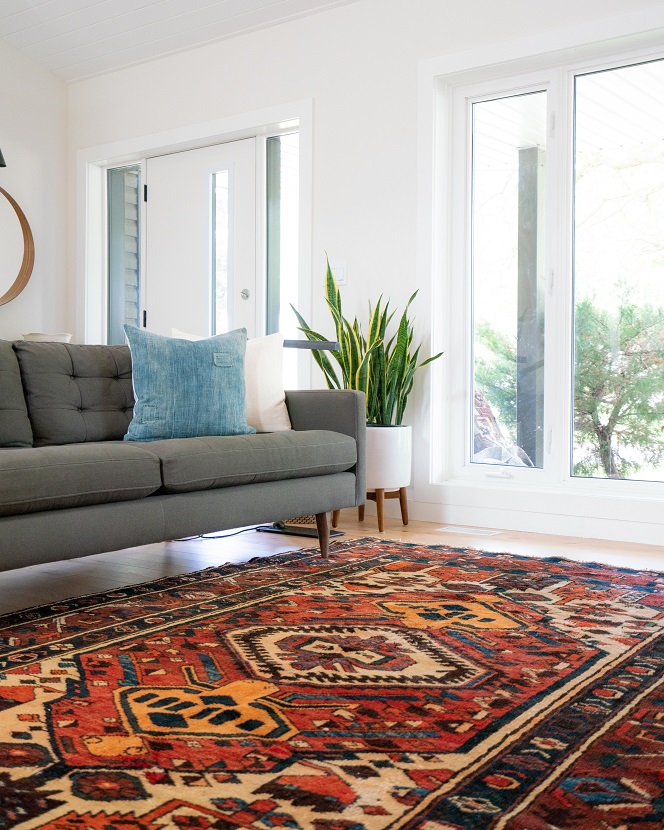
3 Reasons Why You Should Get an Area RugPhoto by Ryan Christodoulou on Unsplash

Less noise

An area rug will significantly decrease the noise in your space. Not only is carpet quieter to walk on than a hard surface floor, it also absorbs sound from the air. Do you notice that your room has a slight echo? That is because the hard surface floor does not absorb sound in the same way that carpet does. Lay down an area rug, and listen to the difference. Source: TheSpruce

Creates a cohesive look

Walking into a large room without an area rug can feel a little bit like walking into a middle-school dance — there are several small groups lining the perimeter of the room looking unsure of what to do. An area rug connects everything and makes it feel nice and cohesive. Alas, if only there had been an area rug at all those awkward middle-school dances. Source: SheKnows

Keeps the floor clean

Whether you have hardwood floors or carpet, a rug can help protect against spills, stains and scuffs – this is especially important if you’re renting! Place one in high-traffic areas like the lounge room, or in areas where the kids play and eat. Indoor/outdoor rugs are great as they are durable and easy to clean. Source: HomesToLove

There are all sorts of area rugs available in the market; you’ll surely be able to find one that fits your home’s aesthetics. Have any problems with your carpet or area rug? We got you covered! Call us anytime.

The post 3 Reasons Why You Should Get an Area Rug appeared first on Curlys Carpet Repair.


from Curlys Carpet Repair https://ift.tt/2QDMVil